
- Кальбус Ігор
- Кам'яниця Убальдіні
- Канада
- Канів
- Каплиця святого великомученика Юрія Переможця
- Каракіс Йосип
- Кароліно-Бугаз
- Карпати
- Квасов Андрій
- Київ
- КиївЗНДІЕП
- Київпроєкт
- Кодаки
- Козелець
- Коллі Микола
- Коляса Христя
- Костел і монастир бенедиктинок
- Кравець Самуїл
- Кривий Ріг
- Крим
- Кричевський Василь
- Купер Г’ю
- Куфтін Борис
- кам'яниці
- кам'яно-вугільний басейн
- католицьких храмів архітектура
- класицизм
- козацька доба
- колони
- комерційні будівлі
- конструктивізм
- кітч
- Майдан Незалежності
- Майдан Свободи
- Малозьомов Іван
- Марченко Віктор
- Метрополітен Дніпровський
- Метрополітен Київський
- Метрополітен Харківський
- Мечеть Джума-Джамі
- Миколаїв
- Монастир отців Оріоністів
- Монастир святого Онуфрія
- Муса Шаза
- майдани
- метрополітену архітектура
- мечеті
- модерн
- модерна доба
- модернізм
- міжвоєнний період
- мікрорайони
- Павільйон Кримської АРСР
- Палац Бандінеллі
- Палац Корнякта
- Палац ханський (Бахчисарай)
- Пежанський Олександр
- Плаксієв Юрій
- План Великого Запоріжжя
- Площа Ринок
- Покора Адам
- Поле дослідне полтавське
- Полкової канцелярії будинок (Козелець)
- Полкової канцелярії будинок (Чернігів)
- Полтава
- Полтавського губернського земства будинок
- Полянський Анатолій
- Прибутковий будинок С.А. Лаврентьєва
- Приймак Борис
- Прихильний Амвросій
- Просвітництво
- Південне узбережжя Криму
- Піонерський табір «Артек»
- Піонерський табір «Молода гвардія»
- Піонерський табір «Юний ленінець»
- планові міста
- порти
- постмодернізм
- православних храмів архітектура
- прибуткові будинки
- промислова архітектура
- піонерські табори
- післявоєнний період
- США
- Санаторій дитячий «Затока»
- Серафимов Сергій
- Середньовіччя
- Середні віки
- Славутич
- Слуцький Григорій
- Собор Борисоглібський
- Собор Катерининський
- Собор Різдва Богородиці
- Собор Софійський
- Собор Спасо-Преображенський
- Собор вірменський (Львів)
- Собор латинський кафедральний (Львів)
- Соцмісто (Кривий Ріг)
- Співачук Володимир
- Станція дослідна ім. М.І. Вавилова
- Страхове товариство «Дністер»
- Суботів
- Сумар Анатолій
- Сучасність
- Схема Великого Дніпра
- Сходи Потьомкінські
- сакральна архітектура
- села архітектура
- село експериментально-показове
- середньовічна архітектура
- сквот «Автономія»
- соцміста
- соцреалізм
- сталінський ампір
- сучасна архітектура
- сучасне мистецтво
- сходи
- Церквa Пресвятої Трійці (Кергонксон)
- Церква Іллінська
- Церква Катерининська
- Церква Пресвятої Євхаристії (Львів)
- Церква Пресвятої Євхаристії (Торонто)
- Церква Пресвятої Родини (Вінніпег)
- Церква Різдва Пресвятої Богородиці
- Церква Святого Хреста (Тандер-Бей)
- Церква Успіння Пресвятої Богородиці (Борислав)
- Церква Успіння Пресвятої Богородиці (Львів)
- Церква святого Іллі (Циблі)
- Церква святого Йозефа (Вінніпег)
- Церква святого Йосафата (Рочестер)
- Церква святого Михаїла (Тиндал)
- Церква святого Михаїла (Транскона)
- Церква святого Стефана (Калгарі)
- Циблі

Over the last 30 years, Maidan Nezalezhnosti in Kyiv has been a place of the constant political redefinition of space. A place, where ideological and physical control and commercialisation have been colliding and coexisting with each other alongside attempts to ‘bring public dimension’ from below.
Read more
The Stalin age in Ukraine is a difficult, traumatic and controversial time. It also makes the perception of the cultural heritage of that era, architecture in particular, difficult. The post-totalitarian trauma of the Ukrainian society prevents the comprehension and perception of those difficult and painful pages of history. The collective memory is at the denial stage, at the stage of oblivion. But unless the past is understood, we cannot overcome its consequences. The comprehension of the heritage of the past is a necessary stage for further development.
Read more
Ukrainian architectural modern is one of the most unusual phenomena in the history of Ukrainian architecture. Simply put, it is seen as a purely ethnic style that used "folk motifs." But this is the wrong way. The architecture of this period became part of the global nation-building process. There is a key difference that distinguishes Ukrainian architectural modern from many other styles. It was not forced by the state but arose as a result of base horizontal construction of a new national identity. To be able to implement this idea, the local Ukrainian elite needed, firstly, resources, secondly, professional training, and thirdly, the ideological base. Therefore, architectural modern can be called the child of three major great ideas of its time: modernism, nationalism and social democracy.
Read more
Goodbye, old Dnipro! That year, in the spring, you will wake up as already young Dnipro! Dnipro of electricity of the future, wide and free, like this stormy sea. Geo Shkurupii, Dmytro Buzko
Read more
Across the field which lies near my home, I walk the same road every day, but every day I come to a new place. Anna Yutchenko
Read more
The development of Kryvyi Rih started with a postal station and later – with a provincial Jewish town. In the 19th century it was surrounded by estates of landlord families of Kolachevsky, Kharin, Yanitsky, Halkovsky, Kharchenko...
Read more
Imagine a village, being attended by sightseeing tours from countrywide and international delegations. Department store’s counters display salmon, caviar, and a local Shuba salad. The locals are involved in work within 135 occupations according to local schoolchildren’s calculations. For its time the village architecture is unique, local architects’ work is award-winning. But what do we have nowadays? Are given statements still true? If this village ever existed?
Read more
From the construction of the first Belle Époque tube in London to the present day, the subway is like no other transport infrastructure associated with scientific and technological progress and still serves as a sign of a high level of "civilization". The architects of the end of the "long 19th century", as well as the "short 20th century" did not imagine the city of the future without the subway. This type of public transport is still perceived by urban residents as an unconditional benefit, occupying an important place in the identity and evoking a sense of pride and affection.
Read more
Slavutych is the last city in the Soviet Union, an “atomograd” (or “nuclear city”) that was meant to replace the tragically famous Prypyat, devastated by the Chernobyl nuclear power plant disaster on April 26, 1986. Thus, a small town with a population of 25,000 people was at the center of political events in the last years of the USSR, becoming almost the last attempt of the state to respond to the deep political, economic and social crisis that followed the catastrophe. And the involvement of architects and builders of the eight republics of the USSR in the design and implementation of Slavutych – an attempt to "strengthen" the fading friendship of the Soviet peoples at the time of its collapse.
Read more
The Renaissance literature begins with The Decameron by Giovanni Boccaccio – the story about ten young men and ladies from prosperous families go to a country estate escaping from the plague & entertain each other by sharing the stories. The Decameron is not just about the plague, however, it’s also about a new age, since its characters are brave enough to criticize the Church, the foundation stone of the medieval community. It’s not about escaping from the epidemic, but also it’s an escape from the society of that period, that was finding itself in a crisis.
Read more
Formerly, rest meant only recovery after exhausting work and consisted of sleep, time for food, and a Sunday visit to church. The upper strata of society had access to a variety of rest or unlimited rest. Instead, the modern era has offered such forms of rest as tourism. Now travel out of necessity (business) or need (natural disasters, war) has acquired research, cultural, entertainment purposes or even lost them altogether. The urbanization processes of the 19th century and the resulting availability of public transport (rail, tram, shipping) rapidly increased mobility for the masses, making freedom of movement the new norm. Of course, only the bourgeoisie could afford a full vacation or trip. Their request stimulated the formation of architectural typologies of hotels, boarding houses and resorts.
Read more
After the Second World War, the attitude towards Jews in the USSR changed dramatically as compared to the interwar period. Until then, the Jewish people had been regarded as a “loyal” minority without a conceivable homeland outside the USSR. (Although as far back as the mid-1930s they were unofficially squeezed out of the administration higher-ups, with an opportunity left for them to pursue careers in the fields of science and culture). However, after the proclamation of the State of Israel in 1948, the Communist party leadership and security services began regarding Soviet Jews, who were cultural professionals, worked at universities or medical institutions, as being a threat. In the territories that had undergone Nazi occupation during the war, this attitude was further intensified by the consequences of three years-long exerting ideological influence of outright anti-Semitic propaganda upon the local population.
Read more
Natalia Borysivna Chmutina (1912–2005) — an outstanding Ukrainian architect, honoured academician of the Ukrainian Academy of Architecture, People’s architect of Ukraine, PhD in architecture, professor.
Read more
The first children's summer camps appeared in the late 19th century in the United States and Europe. There are mentions of children's camps also in the Russian Empire. The ideas underlying the support of the camps by private individuals and statesmen in the capitalist West and in the early USSR were very similar. Both believed that urban industrialized space is harmful to children who have to spend more time in nature. It was also widely believed at the time that skilled professionals could better raise children than their own parents. In the context of these views, children's camps became institutions and spaces that were to combine the functions of rehabilitation, recreation and education.
Read more
They once left Ukraine – on the eve of the First World War, between the wars or during the perestroika, but still call themselves Ukrainians. They took with them memories of mountains, Hutsul legends about forest spirits, their native language, and created their own Ukraine — somewhere overseas — as an alternative reality that might have existed in our country as well if we had not been in the arms of empires for a long time. However, history does not know a conditional mode, so now here in mainland Ukraine, we are trying to deal with the postcolonial consciousness and traumas of the Soviet past, and they, the Ukrainians of Canada, are proud of their national identity and research Ukrainian culture and history. Together with embroidered shirts and chests, they managed to take out a part of the Ukrainian soul and preserve it. A striking example is the preserved Ukrainian spelling of the 1920’s. However, they failed to completely isolate themselves from the cultural influences of another continent, so a strange surzhyk of Ukrainian and English languages was formed in Canada, and sometimes Canadian Ukrainian sounds exotic to us.
Read more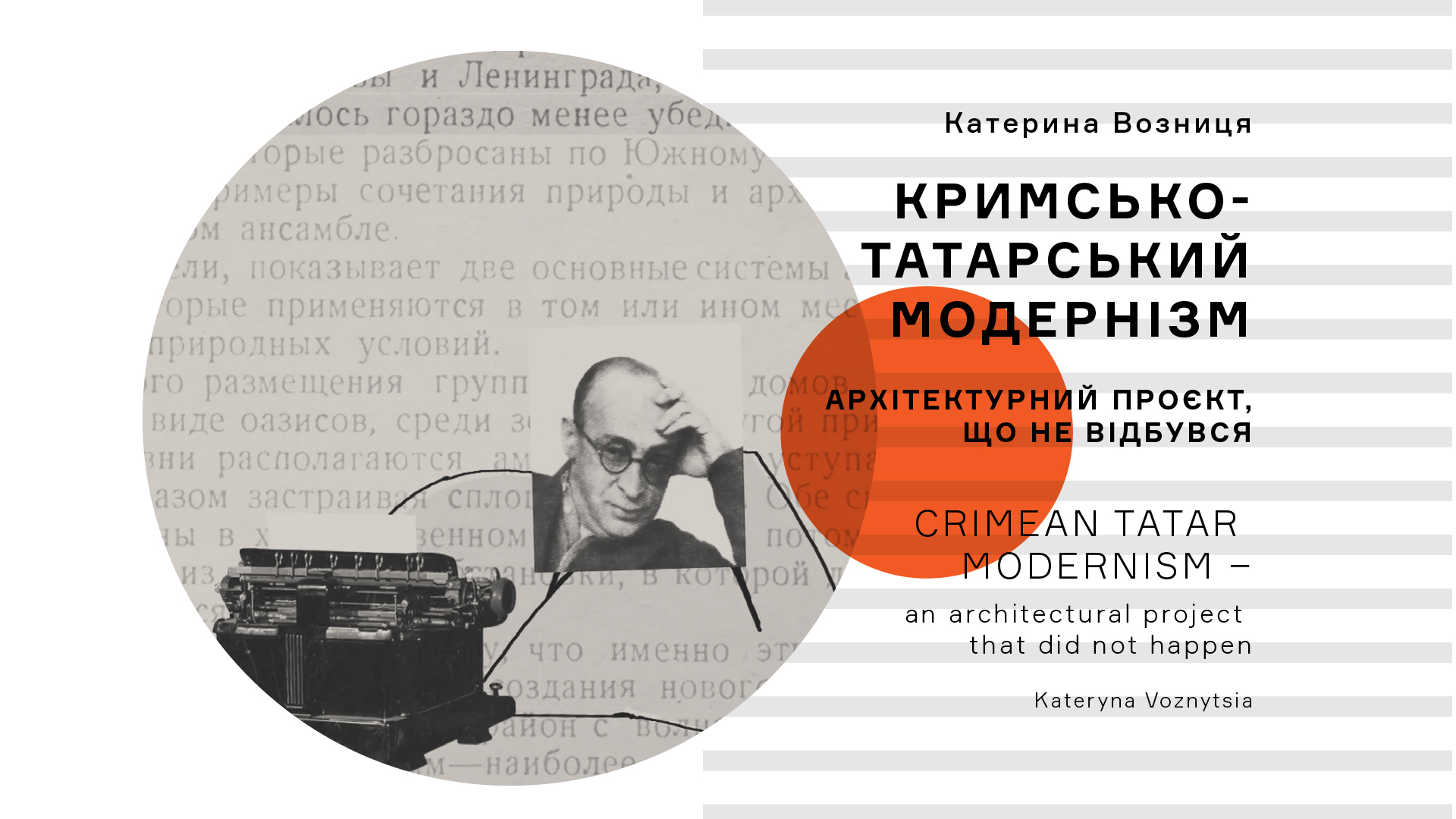
The biography of Moisei Ginzburg (1892–1946), one of the main theorists of Soviet constructivism, reveals some episodes related to the Crimea. Those remained on the margins despite the researchers’ thorough focus on the creative career of the architect. I am inviting the readers to cast a look at how Ginzburg tackled the Crimea issue, and to see whether the experience he gained during his stay on the peninsula influenced his growth as an architect.
Read more